A vehicle's power window system is expected to respond smoothly whenever the driver or passenger presses the control switch. Behind this simple operation, however, several mechanical and electrical factors must work together. The motor needs to deliver suitable driving force, the transmission mechanism must transfer movement efficiently, and the assembled components must remain compatible with the regulator throughout repeated operation. For automotive manufacturers and aftermarket distributors, choosing a Power Window Regulator Motor means looking beyond basic electrical specifications and understanding how motor design influences the performance of the complete window system.
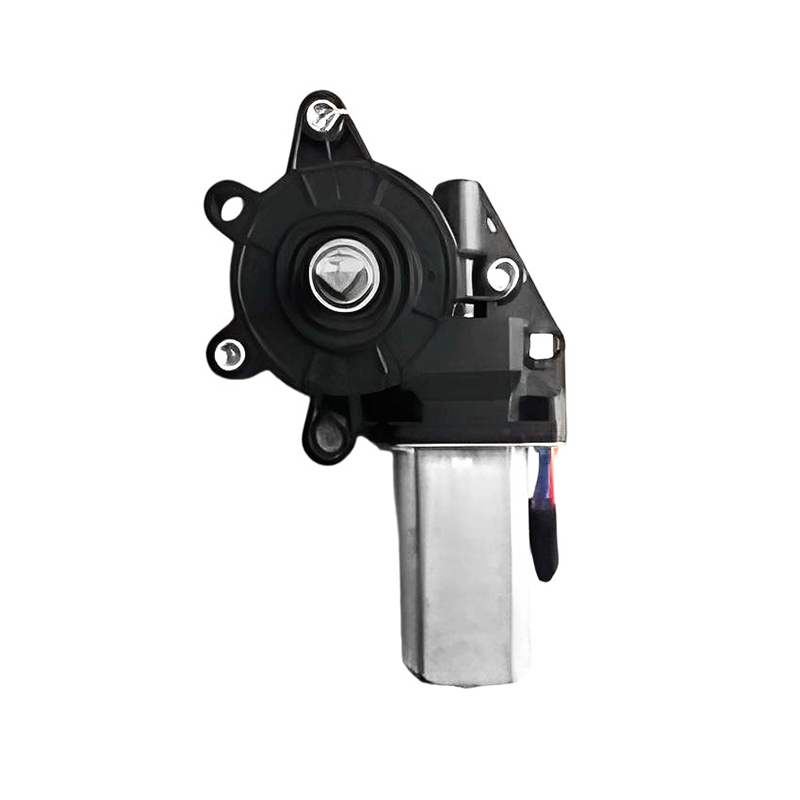
The motor's output needs to correspond with the resistance created by the window regulator, glass weight, and guide mechanism. If the driving force is not appropriate for the application, the window may move inconsistently or place unnecessary stress on connected components.
When developing a motor for a particular regulator, manufacturers need to consider operating load, movement speed, gear reduction, and the mechanical characteristics of the window assembly. These factors should be evaluated together rather than treating rated voltage or rotational speed as the only selection criteria.
For buyers, providing information about the original assembly helps suppliers assess whether the proposed motor is suitable for the intended application.
The motor's rotation is transferred through a gear mechanism before it moves the regulator. Gear dimensions, material selection, tooth engagement, and assembly accuracy can influence how power is transmitted.
Poor alignment or unsuitable gear engagement may contribute to noise, irregular movement, or premature wear. This is why manufacturers should pay attention to the relationship between the motor shaft, reduction gears, and regulator connection during product development.
For replacement parts buyers, it is useful to confirm the gear configuration and connection details instead of relying on external appearance alone. A motor that looks similar may still have a different transmission arrangement.
During operation, an electric motor generates heat. The amount depends on factors such as electrical input, mechanical load, operating duration, and the motor's construction.
Although a vehicle window is not normally operated continuously, repeated use or increased mechanical resistance can affect the motor's working conditions. Manufacturers should consider the expected operating pattern and evaluate the motor under relevant test conditions.
Buyers can also ask about functional testing and operating requirements. This helps establish whether the product has been assessed for the intended application rather than only checked for basic power-on functionality.
The motor must work with the vehicle's wiring and window control arrangement. Connector design, terminal positioning, polarity, and electrical specifications all affect installation and operation.
For automotive parts procurement, these details should be confirmed early in the sourcing process. A clear technical review can cover:
Manufacturers should maintain clear product identification so that different versions are not confused during production, packaging, or warehouse distribution.
A visual inspection cannot fully demonstrate how a motor performs once installed. Functional evaluation provides additional information about electrical operation, movement, noise, and the interaction between the motor and its connected mechanism.
Depending on the product specification, manufacturing checks may include:
The testing procedure should be defined according to the product design and agreed quality requirements. Consistent inspection records also help manufacturers compare production batches and investigate reported issues.
Automotive distributors often manage multiple motor models for different vehicle applications. Similar-looking products can have different connectors, mounting structures, or transmission configurations, making clear identification important.
Manufacturers can support this process through accurate part numbers, application references, labeling, and organized packaging. Buyers should also discuss how product versions will be distinguished when ordering several models together.
This approach can make inventory management more straightforward and reduce confusion during order fulfillment and replacement-part selection.
A Power Window Regulator Motor should be evaluated as part of a larger mechanical and electrical system. Motor output, gear transmission, heat management, connector design, and functional testing all contribute to the final product's suitability. Zhejiang Tongzhou Auto Parts Co., Ltd. approaches automotive component manufacturing with attention to these connected requirements, helping overseas buyers discuss product specifications and application details before production. For distributors and automotive businesses planning repeat purchases, working with a manufacturer that understands the complete window mechanism can support more consistent product selection and procurement.
Your email address will not be published. Required field are marked*
Get in Touch

Design Automobile Motors


 en
 English
 Deutsch
 عربى