
A power window that opens and closes correctly may still create a poor user experience if the movement is accompanied by excessive vibration, clicking, grinding, or inconsistent speed. For automotive engineers and parts buyers, window noise is therefore not simply an acoustic issue. It can also indicate a mismatch between the motor, regulator, guide system, mounting structure, or glass. Recent automotive engineering research continues to examine ways of reducing operating noise in door glass regulator systems, showing why noise deserves attention earlier in product development.
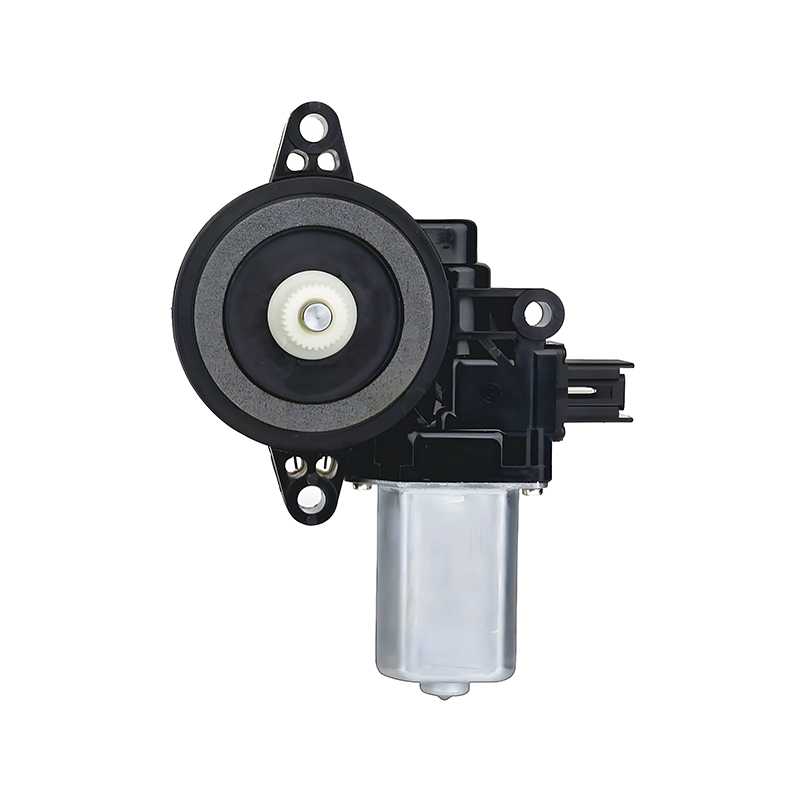
When a power window produces an unusual sound, replacing the motor is not always the complete solution. The regulator cable, gear engagement, guide rail, glass alignment, mounting points, and door structure can all affect how vibration is transmitted.
This is why a motor should be evaluated according to its intended regulator assembly. A supplier that understands the complete mechanism can help engineers distinguish between motor-related characteristics and problems caused by installation or mechanical resistance.
The relationship between motor speed and regulator movement can influence how the glass behaves during opening and closing. If the motor and mechanical system are not properly matched, movement may become less consistent, particularly when the glass encounters changing resistance along its travel path.
For vehicle-specific applications, engineers may therefore need to consider torque, speed, gear reduction, glass weight, guide resistance, and regulator structure together rather than selecting a motor based on one specification.
Modern vehicle doors contain increasingly integrated systems, leaving less room for individual components. Window regulators must coexist with wiring, speakers, locks, reinforcement structures, and other electronic or mechanical parts.
Current industry development is also placing greater emphasis on compact and lightweight regulator designs, particularly as vehicle platforms become more electrified. This makes motor dimensions, mounting orientation, and gear configuration relevant during the early design stage.
A motor that performs well under basic bench conditions may behave differently when installed in the actual regulator. Application testing can reveal problems that are difficult to identify from electrical specifications alone.
For a development project, manufacturers and buyers can consider checking:
These checks help connect motor performance with the real working environment of the vehicle door.
Vehicle-specific requirements can vary considerably. Passenger cars, SUVs, commercial vehicles, and different door configurations may use different regulator structures and operating conditions. Even motors with similar external dimensions may have different mounting points, connectors, gears, or electrical characteristics.
For aftermarket buyers, accurate fitment information is especially important. OE references, vehicle models, samples, drawings, and regulator specifications can give the manufacturer a clearer starting point for identifying or developing the appropriate configuration.
Reducing noise during the prototype stage is only part of the challenge. Once a motor enters regular production, dimensional consistency, component quality, assembly accuracy, and process control can all affect whether the approved performance is maintained.
From a manufacturer's perspective, this means quality should be considered throughout production rather than only during final inspection. Consistent manufacturing also helps distributors and vehicle-parts buyers reduce variation when supplying the same application across multiple batches.
At Zhejiang Tongzhou Auto Parts Co., Ltd., we approach automotive window motor projects according to the actual application rather than treating every requirement as a standard catalog request. Vehicle information, regulator structure, mounting requirements, electrical specifications, and operating conditions can all contribute to selecting an appropriate configuration.
For overseas OEM and aftermarket customers, this application-based approach can make communication between engineers, purchasing teams, and production teams more efficient. A properly matched Glass Regulator Motor can then be evaluated not only for whether it moves the glass, but also for how consistently it works within the complete vehicle door system.
Your email address will not be published. Required field are marked*
Get in Touch

Design Automobile Motors


 en
 English
 Deutsch
 عربى