
For automotive parts buyers, finding a window motor supplier is not only about comparing product prices or catalog specifications. A suitable supplier needs to understand how the motor will operate inside the vehicle door, how it connects with the regulator, and what changes may be required for different vehicle applications. As modern door systems become more compact and increasingly electronic, the ability to support application-specific requirements is becoming an important part of sourcing a Glass Regulator Motor.
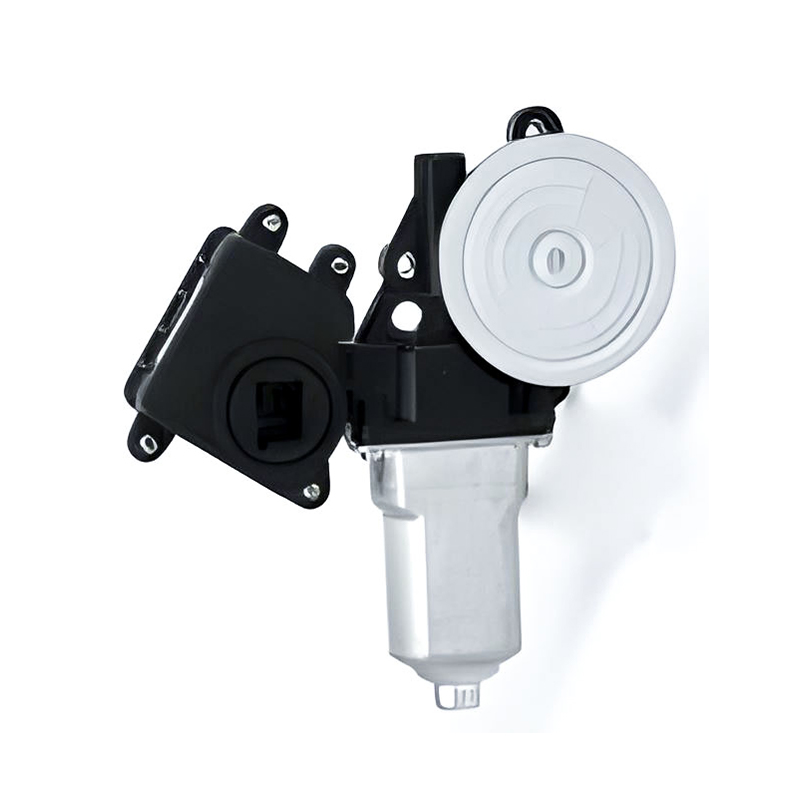
A motor designed for one vehicle platform may not be suitable for another, even when the products appear similar externally. Mounting points, gear structures, connector positions, glass weight, regulator design, and available space can all affect motor selection.
For overseas buyers, this means a supplier should be able to discuss the application rather than simply provide a standard product list. Vehicle model information, OE references, samples, technical drawings, and regulator details can give engineers a clearer basis for development.
Space inside a vehicle door is limited. Window regulators must share the available area with wiring, locks, speakers, reinforcement structures, airbags, and other components. Industry suppliers are therefore developing lighter and more compact regulator architectures to accommodate changing door designs.
A motor manufacturer should consider more than the external dimensions. Mounting direction, gear engagement, housing design, wiring arrangement, and installation access can all influence whether a motor works efficiently within the available space.
A window motor operates close to vehicle occupants, so unnecessary vibration or mechanical noise can quickly become noticeable. Noise may originate from several parts of the system, including the motor, reduction gear, regulator cable, guide rails, or mounting structure.
Modern window-lifter solutions are increasingly designed around smoother speed control and reduced operating noise. Some systems also use electronic control strategies to regulate motor speed during opening and closing. For manufacturers, evaluating these factors during development can help avoid treating noise as an after-production problem.
A reliable sourcing process requires more than checking whether a motor rotates correctly. The motor should be assessed under conditions that reflect its intended vehicle application.
Depending on the project, buyers may discuss:
The specific test program should be determined by the application and customer requirements rather than by a fixed checklist for every vehicle.
OEM and aftermarket projects often require modifications rather than an off-the-shelf motor. A customer may need a different mounting structure, connector, gear arrangement, housing configuration, or electrical specification.
This is where the manufacturer's engineering capability becomes valuable. A supplier that can review drawings, samples, and application requirements can participate earlier in the development process and help identify potential compatibility issues before production. Automotive motor suppliers commonly provide different configurations according to customer requirements, including variations in gear units, electronics, size, and noise performance.
A successful sample is only one stage of an automotive project. Once the design is approved, buyers need confidence that subsequent production will maintain the agreed specifications. Consistent assembly, component control, inspection, and process management therefore become important when selecting a long-term supplier.
For distributors, stable production also matters when supporting replacement-part programs, where the same motor may need to serve a defined vehicle application over an extended period.
At Zhejiang Tongzhou Auto Parts Co., Ltd., we manufacture automotive micro motors including window regulator motors and develop products for different vehicle applications. Our product range covers applications for models from brands including Toyota, Lexus, Mazda, BMW, Infiniti, Tesla, and others.
For overseas OEM and aftermarket customers, we focus on understanding the vehicle application first, then matching the motor structure, installation requirements, and operating conditions. This approach allows a Glass Regulator Motor project to move beyond simple component sourcing toward a more practical solution for vehicle assembly and replacement markets.
Your email address will not be published. Required field are marked*
Get in Touch

Design Automobile Motors


 en
en  English
 Deutsch
 عربى
عربى