
As vehicle platforms continue to incorporate more electrically driven functions, compact motors are becoming important components in many auxiliary and motion-control systems. For automotive buyers and engineers, selecting a motor is no longer simply a matter of comparing rated power. Dimensions, torque characteristics, operating cycles, noise, thermal behavior, and compatibility with the surrounding mechanism can all affect the final system. For manufacturers developing compact vehicle mechanisms, a well-matched Pedal Car Motor can also provide useful insight into how small drive motors should be engineered around the complete application rather than treated as standalone components.
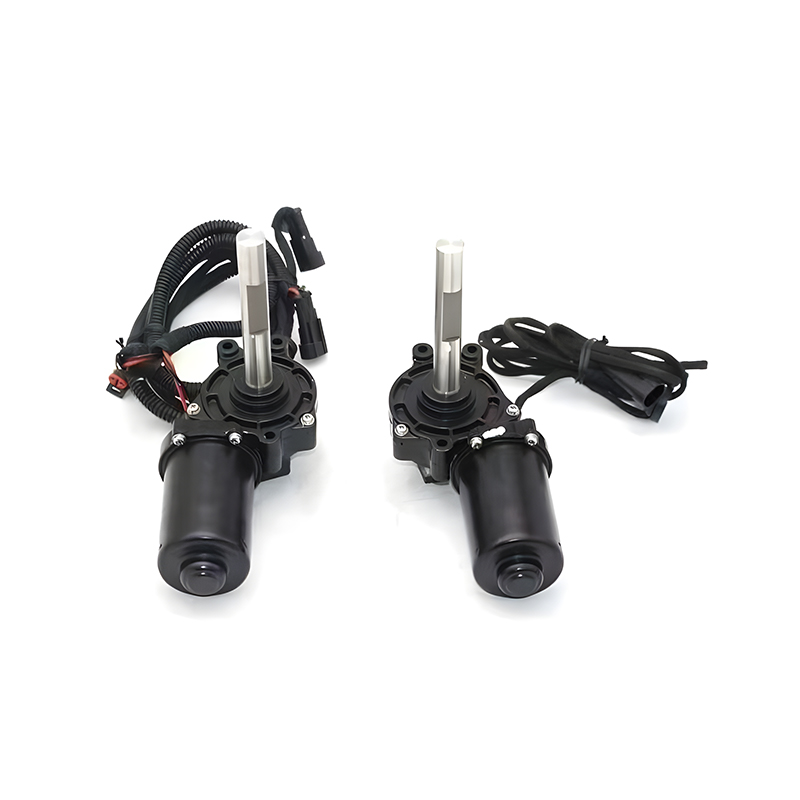
A compact motor must first fit the mechanical structure around it. Available installation space, mounting points, shaft dimensions, transmission components, and load direction all influence the motor configuration.
An undersized motor may struggle under continuous load, while an unnecessarily large motor can create packaging and energy-consumption challenges. Automotive OEM projects therefore benefit from defining the mechanical envelope before finalizing electrical specifications.
For component manufacturers, reviewing drawings and application requirements at the development stage helps ensure that the motor is designed for the actual assembly rather than adapted from a generic product.
Motor performance cannot be judged by speed alone. A vehicle mechanism may require different torque characteristics during starting, acceleration, positioning, and continuous operation.
Engineers should evaluate:
The relationship between these parameters determines whether a motor can deliver stable movement without excessive stress on the drivetrain. Careful matching can also help prevent unnecessary motor sizing and reduce mechanical losses within the complete system.
A motor operating intermittently may experience very different thermal conditions from one operating through repeated cycles. Frequent starts, stops, reversals, or extended operation can increase heat generation within the windings and housing.
For automotive applications, manufacturers should therefore consider the actual duty cycle rather than relying only on short-duration performance testing. Housing design, winding configuration, ventilation, installation position, and surrounding components may all influence heat dissipation.
This becomes particularly important when a compact motor is installed in a confined vehicle structure where airflow is limited.
A motor can meet its basic electrical specifications and still create problems if its mechanical behavior produces unwanted noise or vibration. In modern vehicles, occupants are increasingly sensitive to the acoustic quality of auxiliary mechanisms.
Motor balance, bearing quality, gear engagement, shaft alignment, and assembly accuracy can influence NVH performance. For an automotive component manufacturer, controlling these variables during production is therefore part of creating a more refined end product.
Testing should ideally consider the motor together with its gearbox or driven mechanism because system-level vibration cannot always be identified from an isolated motor test.
For automotive buyers, a successful sample is only the beginning. The greater challenge is maintaining comparable performance throughout repeated production batches.
A suitable manufacturing process should control critical dimensions and electrical characteristics while providing traceable inspection records. Consistency in shaft dimensions, mounting interfaces, winding parameters, and assembly quality helps customers integrate the component into established production processes with fewer unexpected variations.
This is especially relevant for OEM and Tier-level projects where component changes may require additional validation.
Different vehicle platforms often require different motor dimensions, connectors, shaft configurations, torque characteristics, or mounting arrangements. Customization is therefore most effective when it starts with technical information rather than a request for a generic “custom motor.”
A professional development process can include:
This engineering-led approach allows the supplier and customer to identify potential integration issues before mass production.
The growing use of compact electric drive systems is encouraging automotive suppliers to think beyond individual components and consider how motors interact with mechanical structures, electronics, and vehicle functions. Current automotive motor development increasingly emphasizes compact integration, manufacturing consistency, and application-specific engineering.
As an automotive parts manufacturer, Zhejiang Tongzhou Auto Parts Co., Ltd. approaches motor development from the perspective of the complete application. Whether a project involves a Pedal Car Motor or another compact vehicle drive component, understanding the required load, speed, torque, installation space, operating cycle, and production requirements helps create a more suitable OEM solution. This application-focused manufacturing approach gives international buyers a clearer path from prototype development to stable series production.
Your email address will not be published. Required field are marked*
Get in Touch

Design Automobile Motors


 en
en  English
 Deutsch
 عربى
عربى