
Zhejiang Tongzhou Auto Parts Co., Ltd.
As automotive manufacturers continue to integrate more compact electric drive components into vehicle systems, noise and vibration have become useful indicators of product quality. For engineers and procurement teams, an unusual sound is not simply an acoustic issue; it can point to problems involving bearings, gears, rotor balance, assembly accuracy, or load matching. When evaluating a Pedal Car Motor or another compact automotive motor, understanding the relationship between noise, vibration, and manufacturing consistency can help buyers identify potential quality risks before components enter series production.
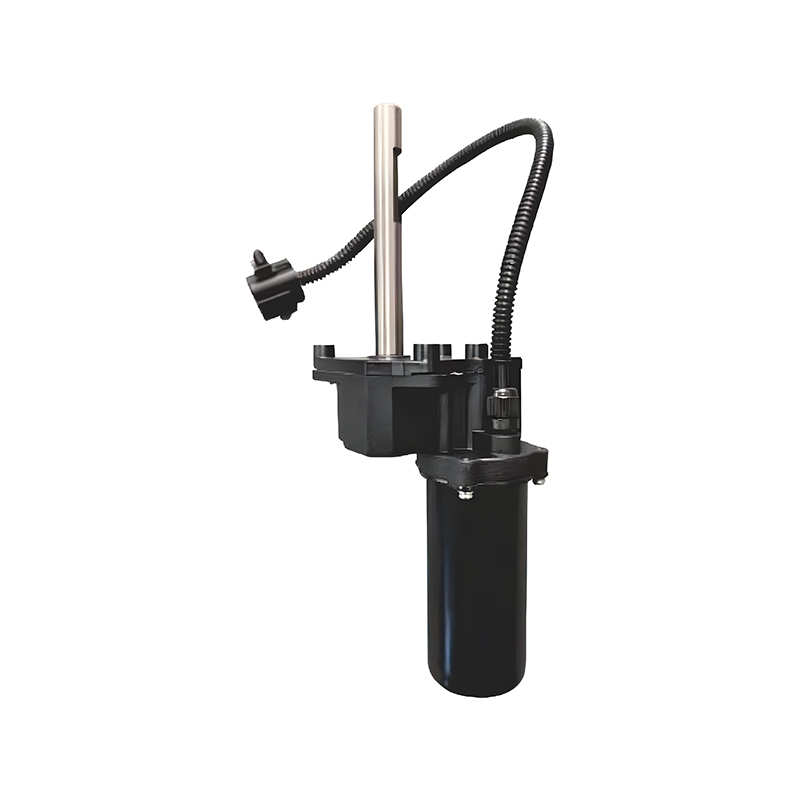
Motor noise can originate from several interacting components rather than a single defect. Shaft alignment, bearing fit, rotor balance, gear engagement, and housing tolerances can all influence the sound produced during operation.
Even when a motor meets its basic voltage and speed requirements, inconsistent mechanical assembly may create unwanted vibration. For automotive component manufacturers, controlling these variables during machining and assembly is therefore important for achieving repeatable performance across production batches.
Vibration testing provides engineers with another way to evaluate motor behavior. Excessive vibration may indicate an imbalance, misalignment, bearing issue, loose connection, or interaction between the motor and its driven mechanism.
A practical evaluation should consider the motor under representative operating conditions instead of relying only on a no-load test. Changes in load and rotational speed can reveal behavior that may not appear during simple inspection.
For OEM buyers, this makes vibration analysis useful during both prototype validation and production quality control.
Many compact vehicle motors work together with reduction gears or other transmission components. The motor and gearbox therefore need to be considered as a combined system.
Poor gear matching can produce:
The correct gear ratio should be determined according to the required speed and torque rather than selected only for compact packaging. This helps the complete drive system operate within a more suitable working range.
Bearings have a direct relationship with shaft movement and rotational stability. Incorrect bearing selection, unsuitable preload, contamination, or inconsistent assembly can affect both noise and service performance.
During manufacturing, bearing installation should therefore be controlled carefully. Shaft fit, alignment, lubrication conditions, and assembly cleanliness can all influence the final result.
For overseas automotive buyers, asking suppliers how bearing-related quality is controlled can provide useful information when comparing potential component manufacturers.
Laboratory testing is valuable, but the test conditions should reflect the intended vehicle application. A compact motor may behave differently when installed inside a confined assembly, connected to a gearbox, or subjected to repeated operating cycles.
A practical validation program can examine:
This system-level approach can help engineers distinguish between a motor-related issue and a problem caused by the surrounding mechanism.
For automotive customers, one successful prototype does not guarantee consistent mass production. The manufacturing process must be capable of reproducing critical mechanical and electrical characteristics from batch to batch.
At Zhejiang Tongzhou Auto Parts Co., Ltd., manufacturing quality is considered throughout the component production process. Attention to machining, assembly, inspection, and performance verification helps create a more controlled path from development samples to production orders.
This is particularly important when a motor becomes part of a larger vehicle assembly where unexpected variation can affect downstream testing.
Noise and vibration should not be treated only as final inspection indicators. They can also provide valuable information during product development, helping engineers identify relationships between motor design, mechanical assembly, load conditions, and vehicle integration.
For international OEM customers, selecting a Pedal Car Motor or compact vehicle motor should therefore involve more than comparing basic specifications. Zhejiang Tongzhou Auto Parts Co., Ltd. combines automotive component manufacturing experience with application-focused evaluation to help customers consider mechanical fit, operating behavior, production consistency, and quality requirements together. This approach supports more informed sourcing decisions and provides a stronger foundation for reliable vehicle component development.
Your email address will not be published. Required field are marked*
Get in Touch

Design Automobile Motors


 en
en  English
 Deutsch
 عربى
عربى