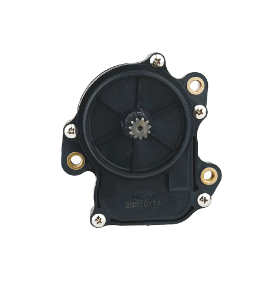
As global automotive supply chains continue to mature, buyers are paying closer attention to how motion components are manufactured, not just how they perform on paper. In this context, the ATV Electric Drive Actuator and the Power Window Lift Motor are increasingly evaluated through the lens of production stability, quality control, and long-term manufacturing capability. Overseas discussions among OEMs and distributors show a clear shift toward suppliers that can demonstrate consistency, transparency, and process discipline.
In the past, manufacturing was often treated as a background function, with limited visibility beyond certifications and basic specifications. Today, buyers want deeper insight into how components are produced. For electric actuators and window motors, this includes winding accuracy, material sourcing, assembly procedures, and internal testing standards. Manufacturing quality is now viewed as a direct extension of product performance and reliability, influencing how components behave throughout their service life.
From a manufacturer’s standpoint, consistency is not accidental—it is the result of controlled processes. Electric drive actuators require precise alignment and stable output to function reliably under varying loads, especially in off-road environments. Window lift motors must deliver smooth, repeatable motion within compact door structures. Achieving this requires standardized workflows, clearly defined tolerances, and disciplined assembly practices that reduce variation from unit to unit while supporting scalable production.
Overseas buyers increasingly recognize that final inspection alone cannot guarantee performance. Instead, quality must be embedded throughout the production process. This includes material verification, in-process checks, and functional testing that simulates real operating conditions. For motion components, these measures help ensure predictable behavior over time, rather than performance that declines after installation or extended use.
In global sourcing discussions, transparency has become a major trust factor. Buyers value manufacturers who can clearly explain their production flow, testing philosophy, and improvement processes. This openness reduces uncertainty and supports smoother collaboration, especially for OEM customers who integrate components into complex vehicle systems. Transparent manufacturing also signals long-term commitment and accountability, rather than short-term supply decisions.
Manufacturers today are expected to serve both OEM and aftermarket channels without compromising quality. While application scenarios may differ, performance expectations remain high. Electric actuators and window motors must maintain compatibility, stable operation, and consistent output regardless of whether they are installed during vehicle assembly or used as replacements later in the vehicle’s lifecycle. Flexible manufacturing planning plays a key role in meeting these parallel demands.
Reliable manufacturing contributes directly to reduced warranty issues, smoother installation, and improved end-user satisfaction. Buyers increasingly associate disciplined production systems with long-term value rather than short-term cost advantages. This perspective reinforces the importance of selecting suppliers who prioritize process stability, continuous improvement, and supply continuity.
As global markets place greater emphasis on reliability and supply continuity, well-manufactured motion components play a critical role in vehicle performance and reputation. This is why dependable solutions like the ATV Electric Drive Actuator and Power Window Lift Motor continue to gain recognition as essential components supported by professional manufacturing expertise.
Your email address will not be published. Required field are marked*
Get in Touch

Design Automobile Motors


 en
en  English
 Deutsch
 عربى
عربى