
A power window problem is rarely caused by one specification alone. When a window moves slowly, stops unexpectedly, produces unusual noise, or fails to match the regulator mechanism, the motor may not be the only factor involved. For automotive parts buyers, the bigger challenge is finding a motor that works reliably with the intended vehicle and regulator configuration. As vehicle doors become more electronically controlled and packaging becomes tighter, manufacturers are paying closer attention to motor compatibility, installation space, operating noise, and system integration.
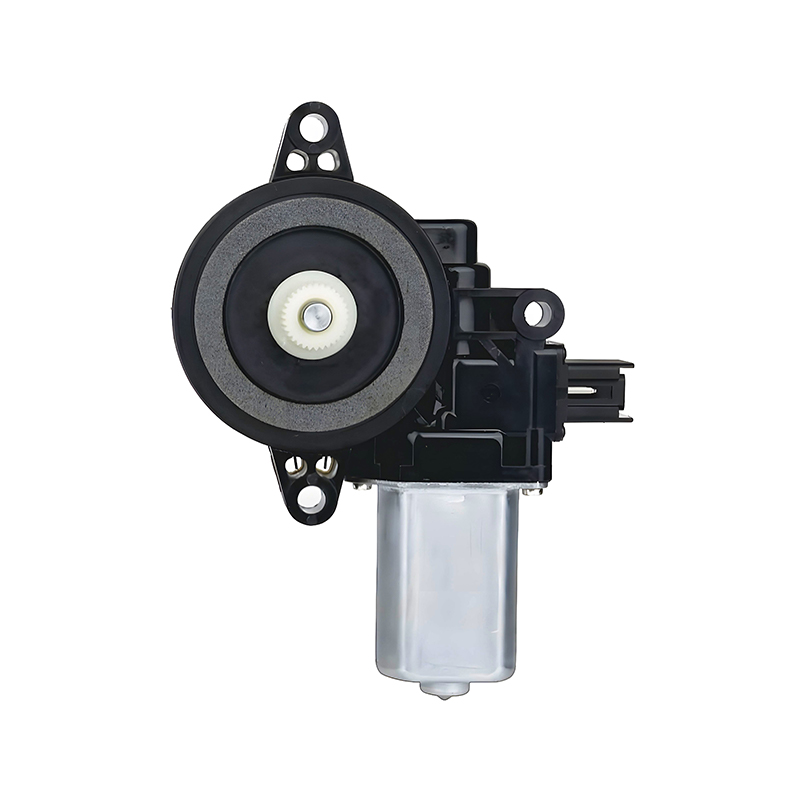
A window motor should be selected according to its actual vehicle application rather than appearance alone. Different door structures can use different regulator layouts, mounting positions, gear interfaces, and electrical connections.
For overseas distributors and replacement-parts buyers, providing vehicle information, OE references, drawings, samples, or regulator details can help a manufacturer identify the appropriate configuration. This is especially useful when similar-looking motors are intended for different applications.
The motor provides the driving force, but the regulator determines how that force is transferred to the glass. Cable systems, scissor mechanisms, and rail-based structures can place different demands on the motor.
A suitable combination needs to account for the resistance created by the glass, guides, mechanism, and installation conditions. A motor that appears suitable when tested separately may behave differently once installed in the complete door assembly. For this reason, manufacturers should evaluate the motor as part of the working system rather than treating it as an isolated component.
Modern vehicle doors contain wiring, speakers, locks, reinforcement structures, handles, airbags, and other components. This leaves limited room for additional mechanisms and makes motor dimensions an important engineering consideration.
A manufacturer working with OEM or aftermarket customers needs to consider mounting position and surrounding components during development. Compact packaging can simplify installation, but reducing size should not be treated as a substitute for proper torque, gear matching, or durability evaluation.
Window operation happens close to passengers, making abnormal sounds easy to notice. Grinding, clicking, vibration, or inconsistent movement may indicate problems involving the motor, gear train, regulator, guides, or mounting condition.
Current automotive window-regulator development places greater attention on low-noise operation and smooth movement, particularly as manufacturers integrate more electronic functions into vehicle doors. A useful manufacturing approach is therefore to examine the complete assembly when investigating noise instead of immediately assuming that the motor is responsible.
Laboratory checks are useful, but they cannot replace application-based testing. When developing or sourcing a replacement motor, buyers should consider whether testing reflects the actual regulator and vehicle environment.
Manufacturers may evaluate areas such as:
These checks can help identify problems before products reach large-scale assembly or aftermarket distribution.
For international buyers, communication with the manufacturer can be just as important as the motor specification itself. A detailed application brief gives engineers more information to work with and can reduce unnecessary sample changes during development.
At Zhejiang Tongzhou Auto Parts Co., Ltd., we approach window motor development from the perspective of the complete vehicle application. Whether a customer is developing an OEM component, sourcing replacement parts, or building a new regulator assembly, understanding the vehicle and mechanical requirements first helps create a more practical Glass Regulator Motor solution for production and aftermarket use.
Your email address will not be published. Required field are marked*
Get in Touch

Design Automobile Motors


 en
en  English
 Deutsch
 عربى
عربى