Zhejiang Tongzhou Auto Parts Co., Ltd.
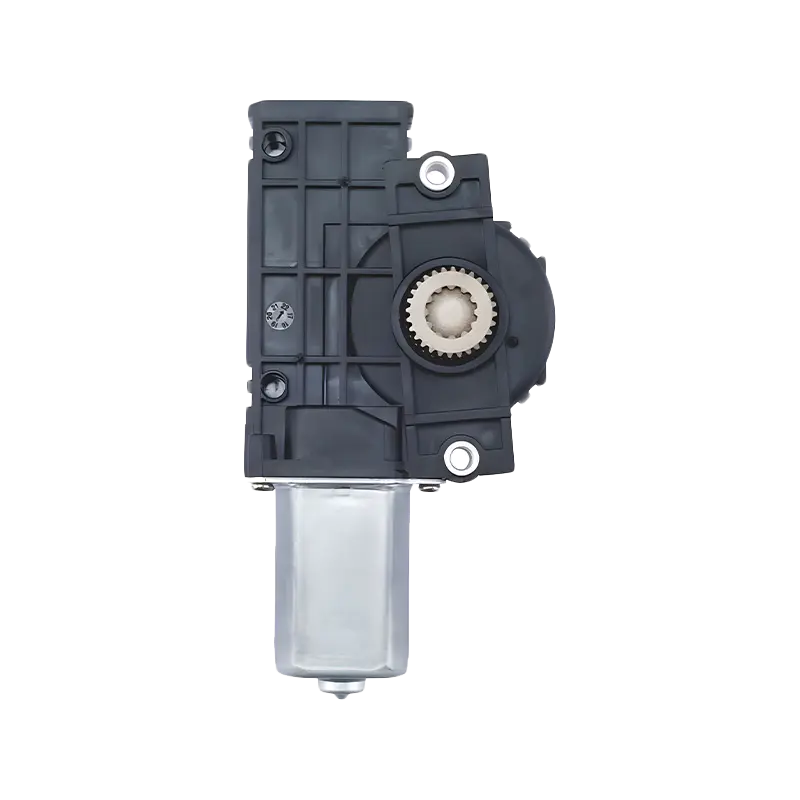
As automotive platforms continue shifting toward smarter cabin systems and enhanced driving comfort, procurement teams and engineering buyers are placing renewed focus on roof module components. Among these, the Sunroof Motor has become a critical element in both premium and mid-range vehicle programs. Recent discussions across automotive engineering forums and Tier-1 supplier networks show that buyers are no longer evaluating sunroof systems only for smooth operation, but also for noise control, torque stability, and long-term durability under extreme weather conditions.
One of the strongest trends in recent automotive sourcing discussions is NVH (Noise, Vibration, Harshness) reduction. End users increasingly expect sunroof systems to operate almost silently, especially in electric and hybrid vehicles where cabin noise is more noticeable.
This has placed pressure on manufacturers to improve motor stability at low speeds, reduce gear friction, and optimize internal transmission structures. A high-quality Sunroof Motor must now ensure consistent movement without jerking, even after thousands of open-close cycles.
Across North America, the Middle East, and Northern Europe, extreme temperature variation is a recurring engineering challenge. Procurement teams are actively searching for motors that can operate reliably in both sub-zero winters and high-temperature summer conditions.
Thermal expansion, lubricant stability, and electronic control resilience are now standard evaluation points in sourcing decisions. Buyers increasingly request validation tests for motor performance under long-duration heat exposure and cold-start scenarios, especially for panoramic sunroof systems.
Another major topic appearing in supplier discussions is gear wear over time. Sunroof systems are expected to maintain smooth alignment even after years of frequent usage.
Engineering teams are paying closer attention to:
These factors directly influence warranty cost and long-term vehicle quality perception, making lifecycle durability a key purchasing driver.
With the rise of connected vehicles, sunroof modules are no longer standalone mechanical units. Many OEMs now require integration with body control modules (BCM) and intelligent cabin systems.
This trend has increased demand for Sunroof Motors that support:
As vehicles become more software-driven, hardware suppliers are expected to provide more than mechanical reliability—they must support system-level integration.
Field performance remains a major concern for global buyers. Sunroof systems are constantly exposed to moisture, dust, and vibration, especially in off-road and commercial vehicle applications.
Manufacturers are now expected to ensure sealing structures that prevent water ingress and maintain stable performance in humid or dusty environments. This includes improved housing design, connector protection, and corrosion-resistant materials for long-term reliability.
For procurement managers, supplier stability is as important as product specification. Large-scale automotive programs require consistent batch quality, stable torque output, and repeatable assembly precision.
As a manufacturer specializing in automotive drive systems, we understand that Sunroof Motor production must follow strict process control, including torque calibration, endurance testing, and assembly verification. This ensures consistent performance across high-volume OEM supply chains and reduces variation between production batches.
1. What are the most common causes of sunroof motor failure?
Most failures are caused by gear wear, electrical instability, moisture intrusion, or long-term overload from misaligned tracks.
2. How long should a Sunroof Motor last in normal vehicle usage?
In standard automotive conditions, a well-designed motor is expected to last through thousands of operation cycles over several years of regular use.
3. Can Sunroof Motors be customized for different vehicle platforms?
Yes. OEM projects often require customization in torque output, mounting structure, electrical interface, and control logic integration.
4. What should buyers check when sourcing a Sunroof Motor supplier?
Key factors include torque stability, noise performance, temperature resistance, waterproof rating, and production consistency across batches.
As automotive comfort systems continue to evolve, the Sunroof Motor has shifted from a simple actuator to a precision-controlled component within the vehicle’s smart cabin ecosystem. Suppliers that can deliver reliability, integration capability, and long-term durability are becoming preferred partners for global OEM programs.
A well-engineered Sunroof Motor is no longer just about opening and closing—it is about delivering consistent performance, system compatibility, and user comfort across the full vehicle lifecycle.
Your email address will not be published. Required field are marked*
Get in Touch

Design Automobile Motors


 en
en  English
 Deutsch
 عربى
عربى