
As industries accelerate toward automation and intelligent systems, compact and high-performance motion components are becoming essential. The Table Lift Motor, once mainly associated with ergonomic desks, is now widely integrated into industrial automation, smart furniture, and medical equipment. At the same time, automotive systems are evolving with more responsive drivetrain control, pushing demand for advanced actuator technologies. For global buyers and engineers, selecting the right motor solution is no longer just about movement—it’s about precision, integration, and long-term reliability.
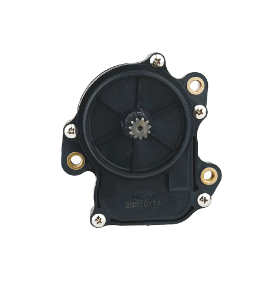
Recent industry developments show a strong move toward intelligent actuators that integrate seamlessly with digital systems. Linear actuator technologies are increasingly combined with IoT and smart control features, enabling real-time monitoring and adaptive performance.
This trend is particularly relevant for manufacturers and OEM buyers looking to optimize system efficiency. Motors are no longer isolated components—they are part of a connected ecosystem that improves productivity, reduces downtime, and supports predictive maintenance strategies.
While office furniture remains a major application, the scope of table lift systems has expanded significantly. Today’s table lift motors are used in:
This diversification reflects broader global demand for flexible and ergonomic solutions. As automation continues to grow, the need for stable and precise vertical motion is becoming more widespread across industries.
From a manufacturer’s perspective, the competitiveness of a table lift motor lies in its engineering details. Buyers are increasingly focusing on:
Load stability during continuous operation
Noise control, especially in indoor or medical environments
Compact design for easy integration
Energy efficiency, aligned with sustainability goals
Electric actuator systems are gaining preference because they offer precise control and easier integration compared to traditional hydraulic or pneumatic solutions.
In the automotive sector, actuators are playing a critical role in improving vehicle control systems. As electric and hybrid vehicles gain traction, the demand for compact, efficient actuators continues to rise.
This evolution is driven by the need for better performance, safety, and energy efficiency across both passenger and utility vehicles.
Choosing the right actuator or motor solution requires a clear understanding of application requirements. Key factors include:
Voltage and control compatibility with existing systems
Environmental protection level (dust, water, vibration)
Torque and load capacity
Service life and maintenance intervals
Manufacturers with strong R&D capabilities are better equipped to offer customized solutions that meet these specific needs, especially in large-scale or specialized projects.
To ensure optimal performance and longevity, proper usage is essential. Based on manufacturing experience, the following practices are recommended:
These measures can significantly reduce failure risks and improve long-term operational stability.
The global actuator market continues to grow steadily, driven by automation, robotics, and smart manufacturing. Industry data shows consistent expansion fueled by increasing adoption across sectors such as automotive, healthcare, and industrial automation.
At the same time, sustainability is becoming a key consideration. Buyers are looking for energy-efficient components that align with environmental regulations while maintaining performance standards.
As equipment and vehicles become more intelligent, the importance of reliable motion control components will only increase. For global procurement teams, the focus is shifting toward solutions that combine precision, durability, and adaptability. By adopting advanced lifting systems alongside robust automotive actuators, businesses can enhance both operational efficiency and product performance. In this evolving landscape, integrating a high-quality Table Lift Motor with a dependable 4WD Front Differential Actuator Motor offers a practical path toward smarter, more responsive systems.
Your email address will not be published. Required field are marked*
Get in Touch

Design Automobile Motors


 en
en  English
 Deutsch
 عربى
عربى