
In a market where downtime directly impacts profitability, global buyers are placing greater emphasis on dependable motion systems that integrate smoothly into modern equipment. The Table Lift Motor, once viewed as a simple lifting solution, is now evolving into a critical component in automated environments, where precision and consistency are non-negotiable. At the same time, automotive systems are undergoing transformation, with actuators playing a larger role in ensuring vehicle adaptability and control under varying conditions.
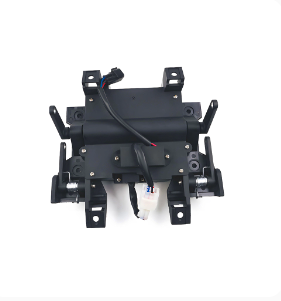
Across industrial sectors, reliability is no longer a secondary consideration—it is often the deciding factor. Equipment operators expect components to perform consistently over long periods without frequent intervention.
For lifting systems, this means motors must deliver stable movement under repeated cycles, while maintaining consistent speed and load capacity. In automotive applications, actuators must respond accurately under dynamic conditions such as vibration, temperature changes, and sudden load shifts.
Manufacturers that can demonstrate consistent production standards and controlled quality processes are more likely to gain trust from international buyers.
One of the most notable trends in recent years is the shift toward system integration. Motors and actuators are expected to work seamlessly with digital control units, sensors, and automated workflows.
For example, table lift systems are increasingly integrated with programmable controllers, allowing users to preset height positions or synchronize multiple lifting columns. This enhances usability and improves operational efficiency in both industrial and commercial environments.
Similarly, automotive actuators are designed to communicate with onboard electronic systems, enabling faster and more precise control responses.
The growing versatility of motion control components is driving demand across multiple sectors:
Manufacturing: Adjustable platforms improve ergonomics and workflow efficiency
Healthcare: Precision lifting supports patient comfort and equipment usability
Logistics: Flexible systems adapt to changing operational requirements
Automotive: Actuators enhance drivetrain functionality and vehicle adaptability
This wide range of applications highlights the importance of selecting components that can perform reliably in different environments.
From a production standpoint, design and material selection are key to ensuring long-term performance. High-quality motors typically feature:
In actuator systems, compact design and robust sealing are particularly important for maintaining performance in challenging conditions.
When evaluating suppliers, experienced buyers often consider more than just product specifications. Important factors include:
Consistency in manufacturing quality
Availability of technical documentation and support
Flexibility for customization
Supply chain stability for long-term cooperation
These elements contribute to a more reliable partnership and reduce risks in large-scale projects.
To maximize the value of motion components, proper installation and usage are essential. Recommended practices include:
Attention to these details helps extend product lifespan and maintain system efficiency.
As industries continue to evolve, the demand for integrated and reliable motion solutions will only increase. Buyers are no longer just purchasing components—they are investing in system performance and long-term stability. By selecting high-quality lifting and actuator solutions, businesses can improve both operational efficiency and user experience. In this context, combining a dependable Table Lift Motor with a robust 4WD Front Differential Actuator Motor provides a well-rounded approach to meeting the demands of modern industrial and automotive applications.
Your email address will not be published. Required field are marked*
Get in Touch

Design Automobile Motors


 en
en  English
 Deutsch
 عربى
عربى