
When a compact vehicle requires controlled and repeatable movement, the motor cannot be evaluated separately from the transmission system. Motor speed, torque, wheel size, load, and gear ratio work together to determine how the final mechanism performs. For automotive component buyers and engineers, understanding this relationship can prevent common development problems such as slow acceleration, insufficient starting torque, excessive motor load, or unnecessary energy consumption. This is also an important consideration when specifying a Pedal Car Motor for an integrated vehicle drive system.
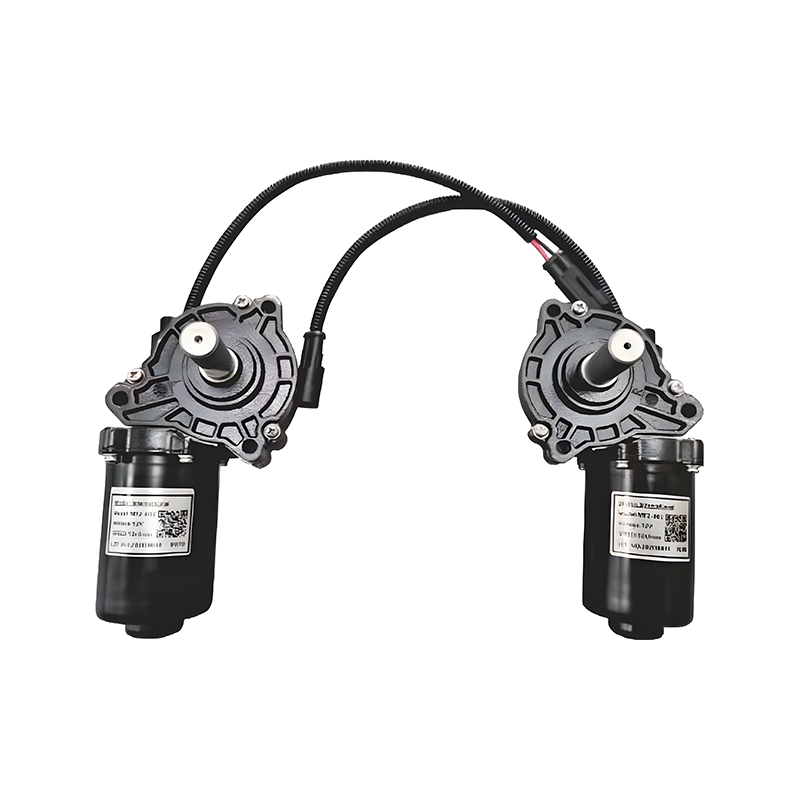
Electric motors can operate at rotational speeds that are not directly suitable for driving the final mechanism. A gearbox or reduction system can convert higher motor speed into a more practical output speed while increasing available torque at the driven shaft.
This means that selecting a motor solely according to its rated RPM may lead to an unsuitable system configuration. Engineers need to consider the required output speed after transmission rather than looking at motor speed in isolation.
For OEM development, this relationship should be established before finalizing the motor specification.
A reduction gear system allows the motor to operate at a suitable rotational range while providing increased output torque. This can be particularly useful when a vehicle needs sufficient force during startup or when operating under a higher load.
However, adding more reduction does not automatically improve the complete system. Mechanical losses, gearbox efficiency, available installation space, and required vehicle speed must also be considered.
The practical goal is to find a suitable balance between:
One of the most important moments in a small drive system is startup. Before the vehicle begins moving, the motor needs to overcome static resistance and accelerate the combined load.
If the selected gear ratio does not provide sufficient output torque, the motor may experience difficulty during startup. Conversely, excessive reduction may produce strong output torque but limit the final operating speed.
Engineers should therefore evaluate startup performance together with continuous operation instead of using maximum speed as the primary selection criterion.
The relationship between motor torque and wheel diameter is another factor that is sometimes underestimated. A larger wheel can travel farther with each rotation, but it may also require greater torque to generate the same tractive force under comparable conditions.
As a result, changing wheel size during vehicle development can affect the original motor and gearbox selection. Automotive component manufacturers should be informed when major mechanical dimensions change so that the drive system can be reassessed rather than assuming the original motor remains suitable.
A motor, gearbox, shaft, mounting structure, and controller need to function as one system. Differences in shaft dimensions, mounting positions, output direction, or electrical connections can create unnecessary engineering work during vehicle assembly.
This is why OEM projects benefit from early coordination between the vehicle developer and component manufacturer. Reviewing mechanical drawings and operating requirements before production allows potential compatibility issues to be addressed during the development stage.
Once the drive system enters production, consistency becomes just as important as initial performance. Variations in motor output, shaft dimensions, gear engagement, or assembly quality can influence the behavior of the completed vehicle.
For automotive component manufacturers, production control should therefore cover both individual components and the assembled drive system where required. Consistent manufacturing helps OEM customers maintain predictable assembly processes and reduces the possibility of performance variation between production batches.
There is no universal motor-to-gear ratio that suits every compact vehicle. The appropriate configuration depends on vehicle weight, wheel dimensions, required speed, operating surface, load conditions, duty cycle, and available battery power.
For Zhejiang Tongzhou Auto Parts Co., Ltd., this application-based approach is central to automotive component development. When customers require a Pedal Car Motor, the motor should be considered together with the transmission and complete vehicle mechanism. Evaluating speed, torque, gear reduction, mechanical dimensions, and operating conditions as a complete system enables OEM buyers to develop a more balanced drive solution and establish a clearer path from prototype testing to repeat production.
Your email address will not be published. Required field are marked*
Get in Touch

Design Automobile Motors


 en
en  English
 Deutsch
 عربى
عربى