
Compact motors may appear simple compared with larger automotive drive units, but their operating environment can have a significant influence on reliability and service performance. Dust, moisture, temperature changes, vibration, and restricted installation spaces can all affect motor behavior over time. For automotive component buyers and engineers, selecting a Pedal Car Motor should therefore involve more than checking voltage, speed, and dimensions. Environmental conditions need to be considered together with the motor's mechanical and electrical design.
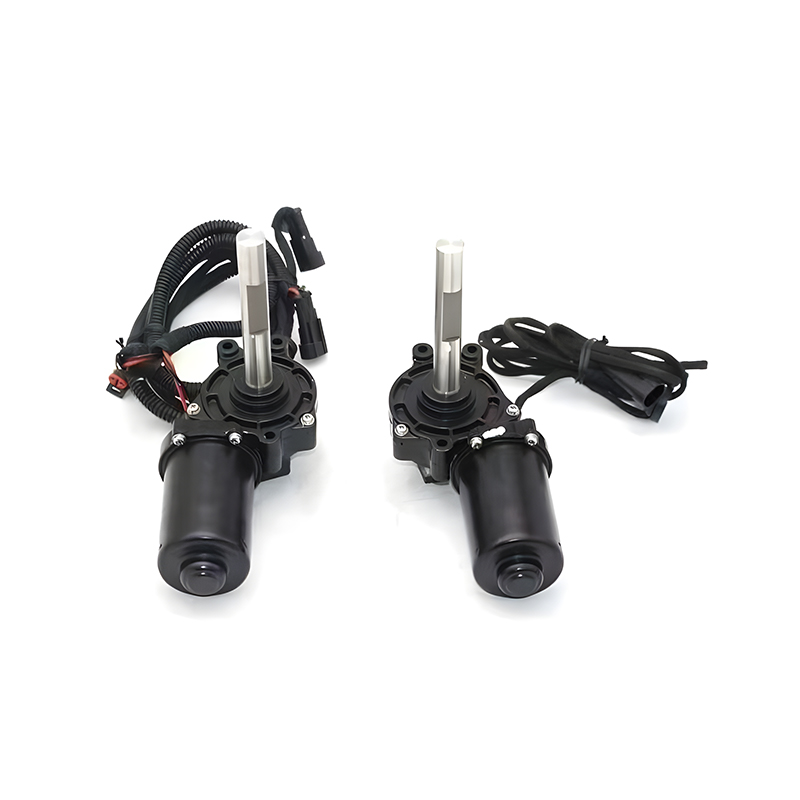
The same motor can experience different stresses depending on where it is installed. A motor mounted inside a protected enclosure may face relatively stable conditions, while a component positioned closer to the wheels or lower vehicle structure may encounter more dust, water, and road debris.
Before confirming a motor specification, engineers should review:
Providing this information to the manufacturer at the development stage allows the motor configuration to be evaluated according to its actual application.
Moisture can enter a motor through openings, connectors, shafts, or other interfaces if the overall assembly is not properly designed. Condensation caused by temperature changes can also create challenges in certain environments.
For OEM projects, protection should therefore be considered at system level. The motor housing, sealing arrangement, connector design, and installation orientation may all influence environmental resistance.
A manufacturer should also distinguish between temporary exposure and continuous exposure when reviewing the customer's requirements.
Motor operating temperature is influenced by electrical load, operating duration, ambient conditions, and heat dissipation. A compact installation can make thermal management more difficult because there may be limited space for natural airflow.
Rather than selecting a motor according to ambient temperature alone, engineers should consider the complete thermal environment. Repeated operation under load may produce different temperature behavior from short intermittent use.
This is particularly relevant for vehicle systems that operate through repeated start-stop cycles.
Dust and small particles can affect bearings, shafts, gears, and other moving interfaces when protection is insufficient. Contamination may increase friction or contribute to premature component wear.
For motors used in vehicle-related mechanisms, the installation structure can be as important as the motor itself. Protective covers, suitable sealing, and appropriate mounting positions can help reduce unnecessary exposure.
This is why environmental assessment should take place before the final motor dimensions and mounting arrangement are approved.
A motor installed in a vehicle does not operate in isolation. Vibration from the chassis, gearbox, wheels, or surrounding mechanism can be transmitted to the motor assembly.
Mounting rigidity, shaft alignment, bearing support, and fastener design can influence how these forces are transferred. During prototype testing, engineers should therefore evaluate the motor within the actual assembly whenever possible.
This approach provides more useful information than testing the motor under completely isolated laboratory conditions.
Environmental protection depends partly on consistent manufacturing. Variations in housing dimensions, sealing interfaces, shaft fit, or assembly quality can influence how a motor performs when exposed to changing conditions.
At Zhejiang Tongzhou Auto Parts Co., Ltd., manufacturing and inspection are considered important parts of automotive component development. For OEM customers, maintaining consistent dimensions and assembly quality helps ensure that motors can be integrated into repeat production with predictable results.
Environmental requirements should never be treated as an afterthought. A motor intended for a compact vehicle mechanism needs to match its installation environment, load, duty cycle, electrical system, and surrounding structure.
For international automotive buyers sourcing a Pedal Car Motor, Zhejiang Tongzhou Auto Parts Co., Ltd. can evaluate the application from a component-manufacturing perspective, taking into account mechanical dimensions, operating conditions, environmental exposure, and production requirements. By defining these factors before mass production, OEM customers can develop a motor solution that is better aligned with the real conditions of the finished vehicle and more suitable for consistent series manufacturing.
Your email address will not be published. Required field are marked*
Get in Touch

Design Automobile Motors


 en
en  English
 Deutsch
 عربى
عربى